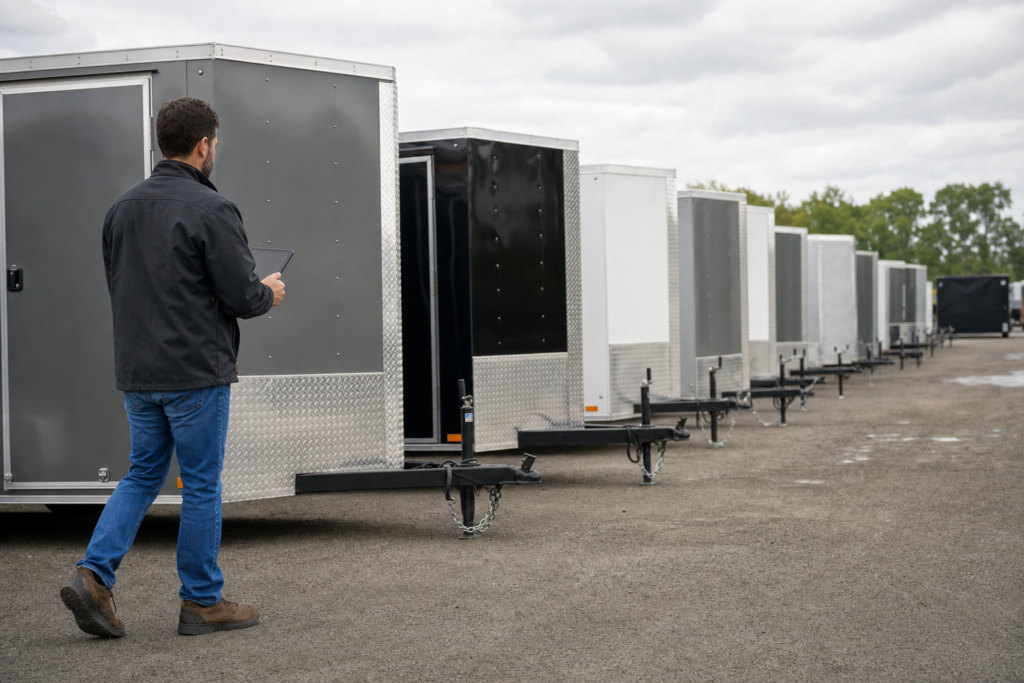
A trailer dealership can look busy and still feel broke. The lot has inventory, the phones ring, and deals sit in the pipeline. Meanwhile, floorplan interest, insurance, payroll, vendor invoices, and tax payments keep leaving the account. Every unit should be treated as a cash decision, not merely a sales opportunity.
Inventory is cash with wheels
When a dealer buys a trailer, cash moves out before the customer arrives. That unit may sell quickly, or it may sit through several weekends while the carrying costs accumulate. A universal inventory benchmark is not required to see the exposure. The dealership needs a unit list with acquisition cost, expected selling price, gross margin, financing cost, days held, and the next realistic action.
Inventory turns matter because a slow unit occupies money that could have supported a better opportunity. The calculation has to include the cash tied up, the cost to hold the unit, and the other work that cash could support. A trailer with a handsome paper margin can still be a poor use of capital if the cash stays trapped for too long.
Separate new arrivals from aged units every week. Aged does not automatically mean bad. It does mean the original plan deserves a fresh look. Perhaps the photos are weak, the configuration is mismatched to local demand, or the price no longer reflects current competition. The fix might be a targeted promotion, a dealer-to-dealer transfer, or a revised purchasing rule. Hope is not an inventory strategy.
Deposits change the timing
Custom orders create a different cash pattern. A customer deposit can reduce the amount of dealer cash at risk, but it does not make every dollar freely available. Track the deposit against the promised unit, the supplier payment schedule, delivery costs, and any refund obligation. A deposit is useful when its terms are clear and the remaining cash need is visible.
Before accepting an order, identify when the vendor needs payment and when the customer expects delivery. Those dates often do not match. If the vendor requires a balance before shipment, the dealer needs a plan for that gap. Sometimes the answer is a larger deposit. Sometimes it is a negotiated due date. Sometimes the correct answer is declining an order that would strain the rest of the lot.
Margins deserve the same discipline. A sale price can look strong until setup labor, freight, accessories, commissions, warranty work, and payment fees are included. The usable margin should be known before the unit is sold than discover it during month-end cleanup.
Vendor dates and customer dates belong together
Dealers often manage receivables and payables in separate conversations. Cash flow does not respect that separation. Put vendor due dates beside customer collection dates. Then mark the fixed expenses that cannot be postponed, such as payroll, rent, insurance, and taxes.
This weekly view answers practical questions. Which invoices must clear before the next shipment? Which customer balances need a call today? Can the dealership buy the next batch without leaning on expensive short-term credit? If the answer is no, the owner can change the purchase timing before the bank balance forces the decision.
Use a simple rule for collections: the person who promised to pay owns the follow-up. A friendly reminder before delivery is easier than a tense call after the unit has left the lot. Payment terms should be written plainly, and exceptions should have an owner and a date.
Clear cash is the useful number
Revenue and inventory value can make a dealership appear healthier than it feels. Pay attention to cleared cash: money that has actually settled and remains available after near-term obligations are covered. A card transaction pending settlement is not the same as money ready for a vendor. An invoice marked paid in a system is not the same as funds visible in the bank.
For a working explanation of the basics, use this educational cash flow breakdown. When a dealer is weighing a purchase, a reserve, or a collection gap, this cash flow calculator gives the team a useful starting worksheet. Verify every result against actual vendor terms and bank activity.
Buy with the calendar in view
The Entrepreneur discussion of cash flow strategy makes a point that applies directly to dealerships: sales activity does not guarantee liquidity. Inventory turns, carrying costs, deposits, margins, vendor due dates, aged units, and cleared cash all belong in the same decision. A larger lot is not the goal. Inventory has to earn its place without starving the business that sells it.
Want this kind of strategy working for your dealership?
Use Trailer Sales Expert to sharpen sales conversations, follow-up, and local content.