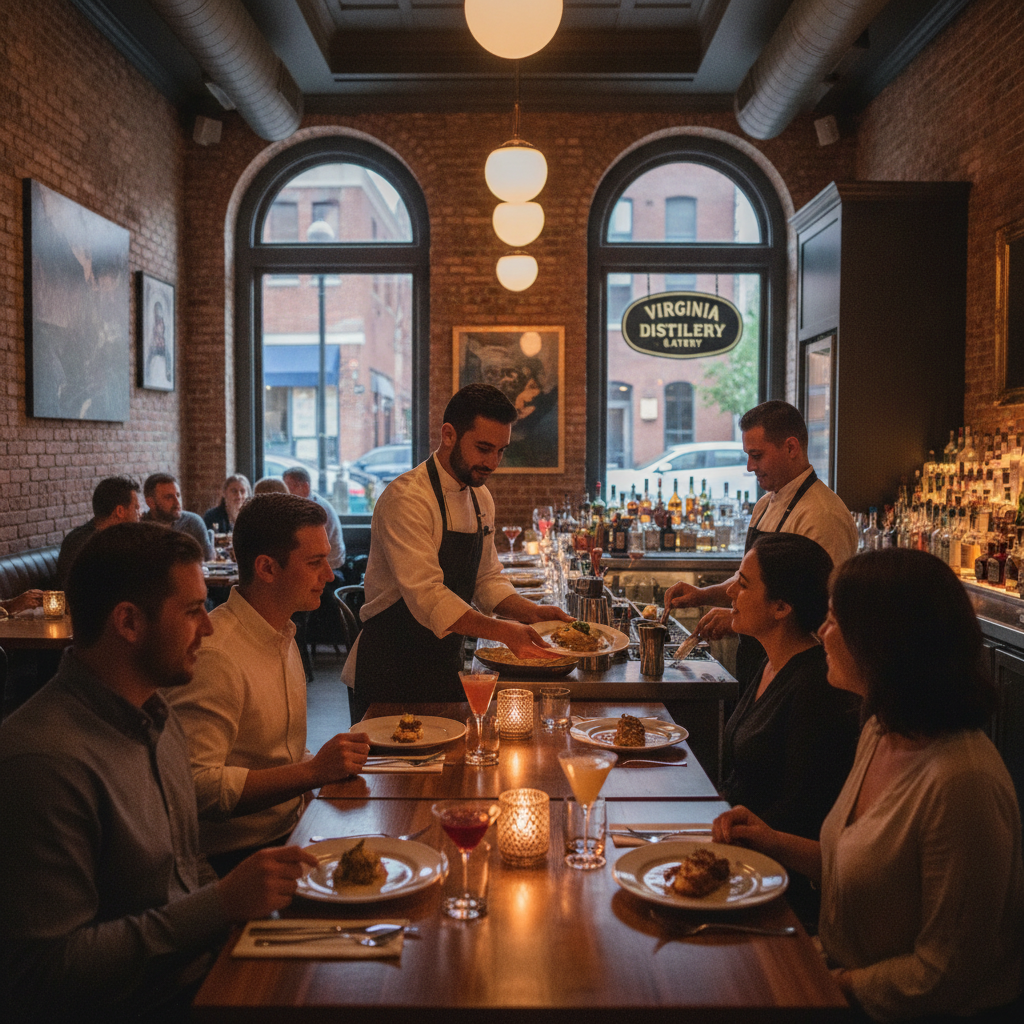
Why would the Commonwealth intentionally make it easier for restaurants to sell more alcohol?
At first glance, that question sounds counterintuitive. But the answer says a lot about how Virginia is changing its approach to business regulation, restaurant economics, and local development. A small adjustment to the Virginia ABC law may not sound dramatic, yet it could affect how restaurants plan menus, hire staff, attract investors, and survive in a competitive hospitality market.
For Virginia restaurants and the broader Virginia hospitality industry, this is more than a technical rule change. It is a signal that lawmakers are reconsidering whether older regulations still match how modern food and beverage businesses actually operate.
The Old Rule
For years, many restaurants holding a Virginia mixed beverage license had to keep food sales above a certain share of total sales. The most commonly discussed benchmark was a 45% food sales requirement. In simple terms, if a restaurant sold too much alcohol compared with food, it risked falling out of compliance.
The idea behind that rule was straightforward: Virginia wanted to make sure a licensed restaurant looked and acted like a restaurant, not a bar with a kitchen attached. That distinction mattered because alcohol regulation in the United States has deep roots in the era after Prohibition. States were wary of letting alcohol-focused businesses expand without limits, so they built rules that tied liquor sales to food service.
The concern was not hard to understand. A place that serves burgers, salads, and dinner specials looks different from a venue that mainly sells cocktails and beer. Lawmakers and regulators used the food-sales test as a proxy for whether a business was really operating as a dining establishment.
That rule created constant pressure for operators. Restaurant owners had to watch their numbers month after month. If alcohol sales rose too quickly, they might have to push more food, adjust pricing, or rethink the menu just to stay within the limit.
Consider a simple example. A neighborhood restaurant might have a profitable happy hour with craft cocktails and wine, but if those drinks start accounting for too much revenue, the operator may feel forced to add more appetizers or entrees than customers actually want. In practice, the rule did not just affect compliance. It influenced business strategy.
The New Law
Virginia’s new law moves away from a one-size-fits-all approach and replaces it with a tiered system. The basic policy change is that not every restaurant is judged by the same rigid standard. Instead, the state now gives more flexibility to some licensed businesses, especially those that have already demonstrated they operate as bona fide restaurants rather than alcohol-first venues.
That matters most for operators that depend on a balanced mix of food and beverage sales. Fine dining restaurants, high-end casual concepts, and establishments with strong dinner and cocktail programs are the most obvious beneficiaries. Restaurants that already serve substantial meals may now have more room to grow their beverage programs without immediately running into compliance problems.
Businesses that function primarily like bars are not likely to see the same benefit. The change is meant to help restaurants, not erase the distinction between dining rooms and drinking establishments. Breweries that expand food service may also pay close attention, especially if they want to offer a fuller hospitality experience.
Lawmakers appear to have made this adjustment for a practical reason: the restaurant market has changed. Today’s customers often expect more integrated experiences. They may want a full meal, but they also expect strong cocktail programs, wine lists, and social dining spaces. A rigid food ratio can make it harder to serve that demand.
The implementation timeline depends on the specific regulatory rollout, licensing guidance, and enforcement updates from the state. Business owners should watch for official ABC instructions so they understand when the new rules take effect and how they will be applied in practice.
Why It Matters For Restaurants And Local Economies
The biggest immediate effect is financial. Alcohol sales often carry much higher profit margins than food. A restaurant may earn a modest margin on a steak, sandwich, or pasta dish after accounting for ingredients, labor, waste, and preparation. A cocktail, by contrast, can generate much more profit relative to its cost.
That difference matters because many restaurants do not make most of their money from food alone. They rely on a combination of dinner traffic, drinks, dessert, and special events to cover rent, payroll, utilities, and debt. When operators have more flexibility in balancing food and beverage sales, they may improve margins without raising menu prices as aggressively.
For independent restaurants, that can mean more breathing room. A small operator with thin margins may use the added flexibility to stabilize cash flow, retain staff, or invest in better equipment. Fine dining restaurants may benefit by expanding wine pairings, tasting menus, and special beverage offerings that enhance the customer experience.
Cocktail bars that want to add serious food service may also see a path to become more than nightlife-only businesses. That can help them serve broader audiences and reduce dependence on late-night traffic alone.
Tourism is another area where this change could matter. Visitors often spend more freely than local customers, especially in destination districts, downtowns, and entertainment areas. If the Virginia tourism economy can support stronger restaurant concepts, that spending can spread into hotels, rideshare services, retail, and attractions.
There is also a staffing angle. Healthier margins can help restaurants pay workers more consistently and retain experienced employees. That does not solve every labor challenge in hospitality, but it can improve the odds that a business stays open, expands hours, or adds service during peak periods.
For investors, the rule change may improve the appeal of restaurant projects in mixed-use developments and redeveloping downtown corridors. When a policy gives operators more control over revenue mix, it can reduce risk and make financing easier to justify.
The Economic Ripple Effect
A successful restaurant rarely benefits only the owner. It can help nearby businesses, landlords, and local governments too. That is why this rule change could create a broader economic ripple effect.
Commercial real estate often responds to restaurant vitality. A strong restaurant can make a strip center, downtown block, or mixed-use project more attractive to tenants and customers. Empty storefronts are harder to fill when foot traffic is weak; a popular dining destination can help change that.
Main Street revitalization depends heavily on places that give people a reason to stay after work and return on weekends. Restaurants anchor those districts. If the new Virginia restaurant liquor law makes those businesses more viable, local leaders may see stronger demand for nearby retail, parking, and entertainment uses.
Local tax revenue can also improve. More sales usually mean more tax collections, and more profitable businesses are generally better positioned to stay open through slow seasons. That matters for cities and counties looking to protect their budgets without raising taxes.
The multiplier effect is easy to miss. A strong restaurant buys from food distributors, linen services, beverage suppliers, maintenance contractors, and marketing firms. It hires workers who spend wages locally. It attracts customers who may also shop, attend events, or book hotels. One successful restaurant does not transform a region by itself, but many healthy restaurants can help shape the direction of a local economy.
That is especially true in entertainment districts and redevelopment zones. If Virginia wants more walkable downtowns and more reasons for residents and tourists to gather, policy changes that help restaurants stay profitable can play a supporting role.
What This Says About Virginia’s Regulatory Direction
This law also points to a bigger policy question: how often do governments keep regulations in place long after the original problem has changed?
The old food-sales rule made sense when lawmakers were trying to distinguish restaurants from bars in a simpler market. But business models evolve. Customer expectations change. Operating costs rise. A rule built for one era may create friction in another.
This is why many observers see the change as a move toward performance-based regulation. Instead of treating every business the same, the state is beginning to recognize that some restaurants can responsibly sell more alcohol while still functioning as restaurants. That approach asks whether a business is actually serving the public the way it claims to, rather than relying too heavily on a single numerical threshold.
That raises fair questions in other areas too. Should occupational licensing be modernized so it reflects actual skills and risks? Should housing rules better match the realities of supply and affordability? Should energy infrastructure approvals move faster when projects clearly support growth? Should small business permitting be simpler for operators trying to open in underused buildings? Should Virginia economic development policy reward projects that can prove results rather than just follow old formulas?
Those are not partisan questions. They are practical ones. A state that wants more investment has to examine whether its business regulations still match current market conditions.
What Business Owners Should Watch Next
This change may not be the last. Business owners should watch for possible future reforms in several areas, even if none of them are guaranteed.
- Expanded mixed-use entertainment districts that encourage dining, nightlife, and retail in the same area
- Further ABC modernization that reduces compliance friction for legitimate restaurants
- New hospitality investment incentives tied to redevelopment and tourism growth
- Downtown redevelopment strategies that use restaurants as anchor tenants
- Broader tourism growth efforts that connect dining, events, and destination marketing
These are possibilities, not predictions. Still, they are worth watching because one policy change often leads to another once lawmakers see how the market responds.
Lessons For Entrepreneurs
The biggest lesson for entrepreneurs is simple: regulations evolve.
A business model that struggled under yesterday’s rules may become viable under tomorrow’s. Operators who stay informed often gain an advantage before competitors notice the shift. A restaurant owner who understands the new Virginia business regulations may be able to redesign a menu, add a bar program, or approach lenders with a stronger growth story.
The same is true for investors and landlords. When a regulatory change improves restaurant margins, it can change how a site is valued and what kind of tenant mix makes sense. In other words, policy changes can create opportunity long before the market fully adjusts.
A Small Law With Bigger Meaning
Virginia’s decision to ease the food-to-liquor sales ratio for restaurants may look narrow, but its implications are broader than they first appear. It touches restaurant profitability, tourism, downtown redevelopment, staffing, and investment confidence. It also shows how state policy can move from rigid historical assumptions toward a more practical view of modern business.
Sometimes the biggest economic changes begin with legislation that appears small on the surface.
For business owners, local officials, and residents alike, the real lesson is to watch policy closely. It often shapes opportunity long before the market reacts. And as Virginia continues adjusting how it regulates restaurants and hospitality, three questions deserve attention: Will more flexible rules help strengthen local business districts? Will lawmakers modernize other outdated regulations with the same approach? And how quickly will entrepreneurs use these changes to reshape Virginia’s business climate?
Want this kind of strategy working for your dealership?
Use Trailer Sales Expert to sharpen sales conversations, follow-up, and local content.